


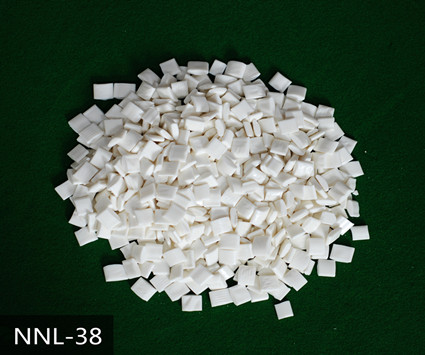
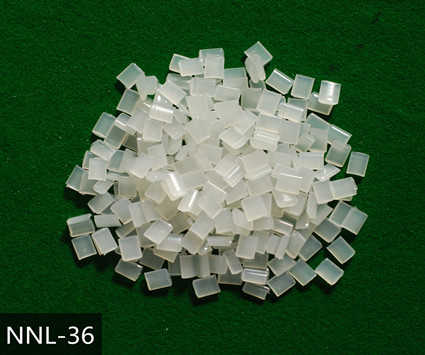
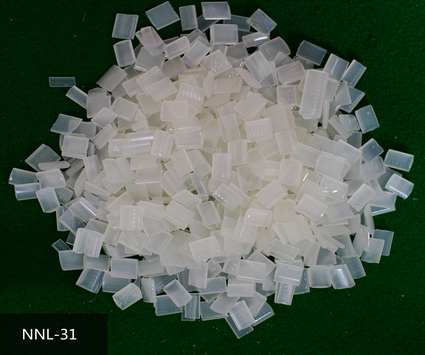
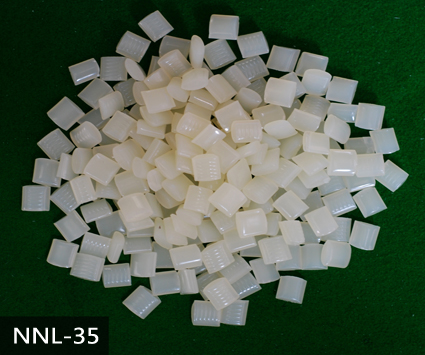
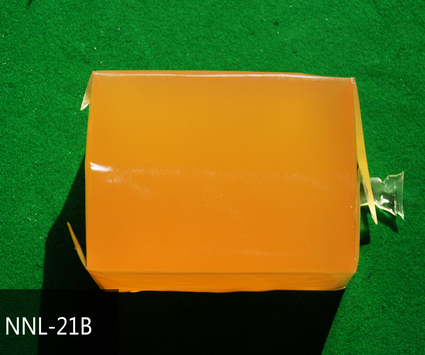

The shoe industry with hot melt adhesive industry relations are inseparable According to statistics, footwear 92% of the market at this stage are used in hot melt adhesive as a binder. Uppers substrate composite bonding adhesive is generally used APAO (poly-α-olefin copolymer) hot melt adhesives, the general characteristics:
(1) Have good adhesion on various uppers substrate.
(2) A long opening time.
(3) Spray performance.
(4) Colorless or white.
(5) Have a certain heat resistance.
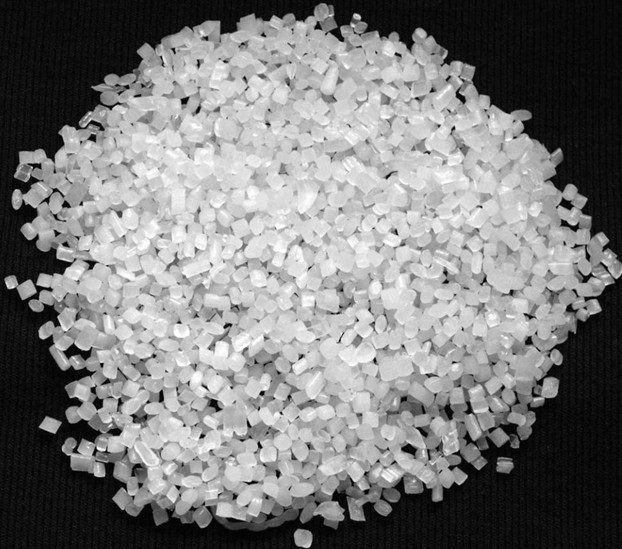
APAO hot melt adhesive determination method:
(1) Color judgment
Determination of color using an iron - cobalt Colorimetric: Hot Melt Adhesive 10 g sample was charged to a glass test tube, and placed in an oven at 150-180 ℃, heated for 30 minutes. Tubes quickly removed from the oven and contrast iron - cobalt color scale, sample chroma were assessed according to GB / T 1722-1992 regulations.
(2) Determination of the viscosity
Determination of the viscosity is executed in accordance with the provisions of HG / T 3660-1999.
(3) A softening point of detection
Determination of softening point in accordance with the provisions of the ring and ball method: (GB / T 15332-1994)
(4) Determination of appearance and quality
Appearance and quality can be detected with the eyes and other senses.
(5) The continuous time of the determination of the adhesive force
Take hot melt sample, after thawing uniformly applied in a 0.05mm thick PET film, and then detected by GB / T 4851-1998 provisions.
(6) Measuring the peeling strength
Take hot melt sample, after thawing uniformly applied in a 0.05mm thick PET film, and then detected by GB/T 2790-1995 provisions.
(7) Determination of thermal stability
Detection of thermal stability in accordance with the provisions of GB / T 16998 1997.
(8) Net content and its deviation detection
According to the provisions of the implementation of the JJF 1070-2005.
NOTE: HG/T 3660-1999 Determination of the melt viscosity of the hot melt adhesive
GB/T 1722-1992 The varnish, edible vegetable oil and diluents’ color determination
GB/T 15332-1994 Determination of the softening point of hot melt adhesives (method Ring and Ball)
GB/T 4581-1998 Pressure Sensitive Tape Test Method
GB/T 2790-1995 Adhesive 180 ° C peel strength test method
GB/T 16998-1997 Determination of hot melt adhesive thermal stability
JJF1070-2005 Net content measurement detection rules
Adhesive in shoe materials problems and solutions
(1) The phenomenon of excess glue
<1>Problems that may occur:1.1 The glue gun vents sticky with dirt
1.2 Glue gun nozzle control valve is not working, and vents closed imprecise
1.3 Pressure is not enough
1.4 The spout angle is not correct
1.5 Vents excessive
1.6 Plastic temperature is too low or too high
<2> Corresponding solutions:2.1 Clean or replace the nozzle
2.2 Replacement or repair of the control valve and nozzle
2.3 Increase the pressure of the machine
2.4 Adjust the nozzle angle
2.5 To replace a small mouth nozzle
2.6 Raise or lower the temperature of the glue, so as to achieve reasonable
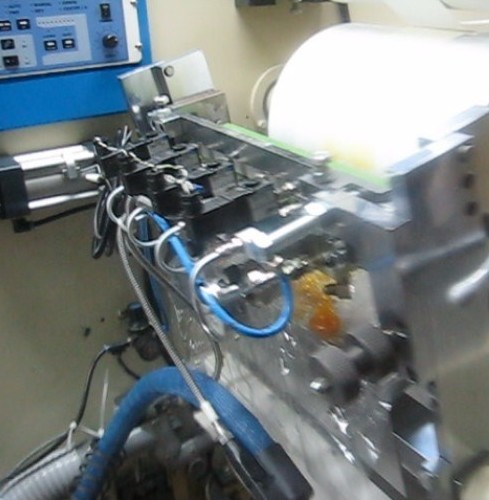
(2) Shoe material bonding is not firmly
<1>Problems that may occur:1.1 Production line open too long
1.2 Insufficient amount of glue
1.3 Weak pressure or to keep the pressure on short time
1.4 Glue temperature is too low
1.5 Shoe base surface is too cold
1.6 The shoe base surface moisture or surface contamination
<2> Corresponding solutions:2.1 Shortening the opening hours of the production line or extend glue opening hours
2.2 Increase the amount of glue
2.3 To intensify pressure or extended pressure holding time
2.4 Improve with glue temperature
2.5 Pre-heating of the upper substrate
2.6 Drying the base surface, cleaning shoe base surface
(3) Uppers glue line uneven
<1>Problems that may occur:1.1 Nozzle clogging
1.2 Pressure drop
1.3 Lack of ability to melt
<2> Corresponding solutions:2.1 Cleaning or repair nozzle
2.2 An appropriate increase in pressure
2.3 An appropriate increase in temperature
(1) Have good adhesion on various uppers substrate.
(2) A long opening time.
(3) Spray performance.
(4) Colorless or white.
(5) Have a certain heat resistance.
APAO hot melt adhesive determination method:
(1) Color judgment
Determination of color using an iron - cobalt Colorimetric: Hot Melt Adhesive 10 g sample was charged to a glass test tube, and placed in an oven at 150-180 ℃, heated for 30 minutes. Tubes quickly removed from the oven and contrast iron - cobalt color scale, sample chroma were assessed according to GB / T 1722-1992 regulations.
(2) Determination of the viscosity
Determination of the viscosity is executed in accordance with the provisions of HG / T 3660-1999.
(3) A softening point of detection
Determination of softening point in accordance with the provisions of the ring and ball method: (GB / T 15332-1994)
(4) Determination of appearance and quality
Appearance and quality can be detected with the eyes and other senses.
(5) The continuous time of the determination of the adhesive force
Take hot melt sample, after thawing uniformly applied in a 0.05mm thick PET film, and then detected by GB / T 4851-1998 provisions.
(6) Measuring the peeling strength
Take hot melt sample, after thawing uniformly applied in a 0.05mm thick PET film, and then detected by GB/T 2790-1995 provisions.
(7) Determination of thermal stability
Detection of thermal stability in accordance with the provisions of GB / T 16998 1997.
(8) Net content and its deviation detection
According to the provisions of the implementation of the JJF 1070-2005.
NOTE: HG/T 3660-1999 Determination of the melt viscosity of the hot melt adhesive
GB/T 1722-1992 The varnish, edible vegetable oil and diluents’ color determination
GB/T 15332-1994 Determination of the softening point of hot melt adhesives (method Ring and Ball)
GB/T 4581-1998 Pressure Sensitive Tape Test Method
GB/T 2790-1995 Adhesive 180 ° C peel strength test method
GB/T 16998-1997 Determination of hot melt adhesive thermal stability
JJF1070-2005 Net content measurement detection rules
Adhesive in shoe materials problems and solutions
(1) The phenomenon of excess glue
<1>Problems that may occur:1.1 The glue gun vents sticky with dirt
1.2 Glue gun nozzle control valve is not working, and vents closed imprecise
1.3 Pressure is not enough
1.4 The spout angle is not correct
1.5 Vents excessive
1.6 Plastic temperature is too low or too high
<2> Corresponding solutions:2.1 Clean or replace the nozzle
2.2 Replacement or repair of the control valve and nozzle
2.3 Increase the pressure of the machine
2.4 Adjust the nozzle angle
2.5 To replace a small mouth nozzle
2.6 Raise or lower the temperature of the glue, so as to achieve reasonable
(2) Shoe material bonding is not firmly
<1>Problems that may occur:1.1 Production line open too long
1.2 Insufficient amount of glue
1.3 Weak pressure or to keep the pressure on short time
1.4 Glue temperature is too low
1.5 Shoe base surface is too cold
1.6 The shoe base surface moisture or surface contamination
<2> Corresponding solutions:2.1 Shortening the opening hours of the production line or extend glue opening hours
2.2 Increase the amount of glue
2.3 To intensify pressure or extended pressure holding time
2.4 Improve with glue temperature
2.5 Pre-heating of the upper substrate
2.6 Drying the base surface, cleaning shoe base surface
(3) Uppers glue line uneven
<1>Problems that may occur:1.1 Nozzle clogging
1.2 Pressure drop
1.3 Lack of ability to melt
<2> Corresponding solutions:2.1 Cleaning or repair nozzle
2.2 An appropriate increase in pressure
2.3 An appropriate increase in temperature